Clare Stronge on Útóipe Cheilteach Co-development between Ireland + Sweden
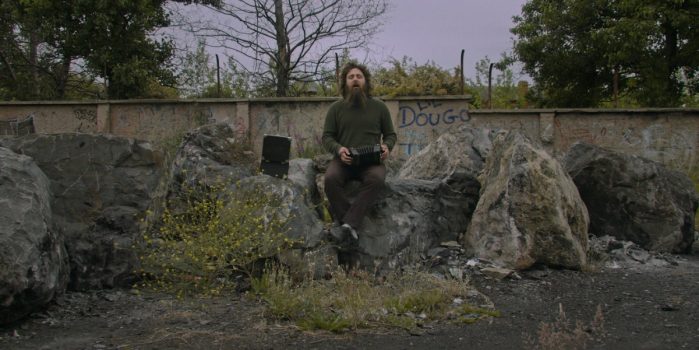
Irish producer Clare Stronge on leading the co-development of Útóipe Cheilteach (Celtic Utopia), a feature documentary that was supported in development by Creative Europe MEDIA's European Co-development funding.
Útóipe Cheilteach (Celtic Utopia) is a co-production between Swedish company, MDEMC (majority partner) and Irish company, Plainsong Films (minority partner) with Irish producer Clare Stronge leading the co-development.
Creative Europe MEDIA's European Co-development funding supports the co-development of one animation, creative documentary, or fiction project for cinema, TV, or digital platforms. The deadline for the next call is 25 February 2026.
We asked Clare about the co-development process and applying for MEDIA funding (see below).
About Útóipe Cheilteach
Written and directed by Dennis Harvey & Lars Lovén, Útóipe Cheilteach is a feature documentary that tells the story of a new Ireland, following a resurgent wave of alternative folk and traditional musicians who are making music 'to scare priests and politicians.'
The documentary was Grand Prix winner at Critics' Week at Locarno Film Festival 2025 in Switzerland.
The film features performances and appearances from artists such as The Mary Wallopers, Negro Impacto, The Deadlians, Jinx Lennon, Poor Creature, Branwen, Lankum, Naoise Mac Cathmhaoil, Rising Damp, Young Spencer, Eoghan Ó Ceannabháin, Róis, Post Punk Podge, Susan Hughes, Tadhg Mulligan, Alfie Mulligan, Múlú, Niamh Moriarty, Cathail O’Mhaoil, Summer Newman, Eimear Níc Ionnrachtaigh, and Eoghan Ó Garmaile.
Clare Stronge, Plainsong Films
Clare Stronge is an Emmy and IFTA winning documentary filmmaker based in Dublin, Ireland. She founded Plainsong Films, a production company specialising in creative feature documentaries, in 2020. Plainsong focuses on specialist factual subjects and finds ways to cross-pollinate talent, story and artforms to create cinematic feature documentaries that are bold, ambitious, diverse, original and innovative.
How did Plainsong become involved with the Útóipe Cheilteach project and what was the appeal of this documentary subject?
In 2022, I was working with filmmaker Dennis Harvey helping him finish and launch his film I MUST AWAY (Dennis Harvey, 2023) when Dennis pitched ÚTOIPE CHEILTEACH to me as his next project. Dennis was living and working in Sweden in the time where he, and the film’s co-director Lars Loven, had just received development funding from the Swedish Film Institute to develop the idea alongside Swedish producer Elin Lilleman Erikkson of MDEMC Produktion, Stockholm.
I really loved the teaser that Dennis showed me. The film had a very strong archival focus at that time which I found intriguing. Being based in Sweden also lent a freshness to Dennis and Lars’ appreciation of the contemporary Irish folk music scene here in Ireland. The film’s Co-Director Lars Loven is also a Swedish music journalist who had previously co-directed a film called FONKO (Lamin Daniel Jadama, Lars Lovén, Göran Hugo Olsson, 2016) which explored music and postcolonialism in Africa. He and Dennis were fascinated to explore the Irish music scene through this similar postcolonial lens. I felt that Dennis and Lars were a brilliant team who possessed fantastic complementary skills, knowledge and experience that would result in an original and exciting film.
How did the co-development with your Swedish co-partner MDEMC come about and what does it mean to be a minority partner on a co-development project like this?
I was very fortunate to be able to meet the film’s co-director Lars and the Swedish producer Elin Lilleman Erikkson in person in Dublin to discuss the details of a potential co-production. We teased out a potential financing strategy that initially included our respective film institutes in both Sweden and Ireland, key broadcast partners in both countries, which would potentially open access to Coimisiún na Meán specifically here in Ireland, and finally a number of European broadcast pre-sales for the finished film.
Together we brought the project to several film markets including the Galway Film Fleadh and DocsIreland. Dennis and I also travelled to La Rochelle in France to pitch at Sunnyside of the Doc where we won a Jury Prize to attend IMZ Music + Media Festival in Berlin. A few months later Dennis and Lars subsequently went to Berlin and we were delighted when they secured an LOI [Letter of Intent] from Swiss broadcaster SRF for the film.
At this time, my company had just been successfully awarded a Development Slate grant from Creative Europe so, having been through that application process relatively recently, I suggested the Swedish company MDEMC and my company Plainsong Films should apply together for a Creative Europe Co-Development award, which neither of us had done before.
It was a learning curve for us all in that, although the Co-Development application is similar in many ways to the Development Slate application, there are a lot more questions around the specifics of how the co-production will actually work in practice. This application form really requires you and your co-producer to drill down into the minute detail of who will do what exactly in which country, when the film is ultimately in production.
Do you have any tips on applying for European Co-development funding and what are the benefits of this award?
I was initially surprised by the level of detail required in the application about the proposed workflow between the two companies but actually it was a brilliant process for us to go through. It forced us to think about, and decide now, who will do what excatly when the film actually enters production. Spending time teasing out these finer details ultimately paid off in spades -- both in terms of the success of our application but also because now we had in our hands a very clear and precise understanding - as well as a concrete plan - for how our co-production would actually work.
We were all delighted when our application was successful and the development funding we received facilitated some really key development filming for Útóipe Cheilteach in the north of Ireland which turned out to be a very important shoot for the creative development of the film. Having a successful Creative Europe Co-Development award also strengthened all our subsequent funding applications as it demonstrates to a potential financier that the project has been well developed, and has been backed financially and creatively by respected decision makers who have deep knowledge of European and international tastes and markets.
Unfortunately the year that we were successfully awarded the Creative Europe Co-Development award, my own company Plainsong Films went into full-time production on two feature documentary projects that I was personally directing. This meant I was unable to continue my journey with Útóipe Cheilteach and see it over the finish line. But it has been a joy to see the film do so well both in Ireland and on the international stage. Útóipe Cheilteach had its world premiere at the prestigious Semaine de la Critique (Critics Week) at Locarno Film Festival in Switzerland where it won the Grand Prix.
The film has also gone on to play at festivals including Cork International Film Festival and at festivals all over the world. It was also recently nominated for the George Morrison ‘Best Feature Documentary’ award at the 2026 Irish Film and Television Academy awards.The film Útóipe Cheilteach remained very true to the original vision of Dennis and Lars that I saw in that early teaser and it is wonderful to see their vision fully realised and on a big screen.
The story is a testament to the power of music and creativity to make a change in society and I strongly feel we need more films like Útóipe Cheilteach in the world!
Útóipe Cheilteach (Celtic Utopia) opens across Ireland on 4 September 2026.